
B.Sc. in Fine Arts in Theater
Program Profile
The program offers the chance to experience the collaborative process by which actors, designers, directors, scholars and technicians interpret a playscript and translate a shared vision of its meaning into the medium of theatrical production. Classes develop the skills essential to this process: critical thinking, research methods, intuitive reasoning, communication, project planning and time management, problem-solving, teamwork and leadership. The department strives also to instill in students awareness of the transformative power of theatre as an instrument of social change and the corresponding ethical responsibility of the artist for the integrity of the transaction between actor and audience.
The integration of theory and practice is fundamental to the program, as it is to successful theatre, and the conceptual learning of formal coursework is therefore augmented by laboratory work in the form of theatrical productions. Productions are chosen with attention to the developmental needs of the current student population. In a four-year period, students will experience a broad range of styles and periods of dramatic literature in performance.
Occupational profiles of graduates
Qualification awarded
Bachelor of Fine Arts in Theater (BFA)
Length of programme
4 Years
Number of credits
240 ECTS credits
Mode of Study
Full time on campus
Read more about the programme
Get detailed information about the programme requirements, courses, credits, and educational objectives as a PDF file.
Program Educational Objectives (PEOs)
1- To master the history, literature, theories, and performance skills prerequisite to advanced training in theatre arts or a career in the entertainment industry.
2- To apply and test knowledge through work on a variety of theatre productions as relevant to their emphasis within the program.
3- To direct, act, design, stage manage a theatrical production(s), significant artistic project, or write a substantial thesis.
4- To be able to describe, analyze, interpret and evaluate dramatic literature and theatrical productions.
5- To be able to articulate the formal, technical, historical, and theoretical attributes of their work and the work of others.
6- To be able to apply performance practices and use critical language as it applies to their own work and the work of others.
Program Learning Outcomes
Students who complete the theater program will be able to:
Performance and Acting Skills
- Demonstrate advanced techniques in voice, movement, and character development through performances that show emotional depth and physical control
- Apply various acting methodologies (e.g., Stanislavski, Method) to create compelling and authentic character interpretations
- Exhibit professional conduct during rehearsals and performances, including effective collaboration with cast and crew members
Technical Theater and Design
- Design and execute technical elements of theatrical production including lighting, sound, costumes, and scenic design
- Create detailed production documentation including ground plans, lighting plots, sound cues, and costume renderings
Dramatic Literature and Theory
- Analyze dramatic texts from various historical periods and cultural contexts using appropriate theatrical terminology
- Evaluate the historical, social, and cultural influences on theatrical works and their impact on contemporary theater
- Apply dramatic theory and criticism to analyze both historical and contemporary theatrical productions
Production and Direction
- Conceptualize and execute theatrical productions that demonstrate creative vision and effective storytelling
- Lead and manage production teams through all phases of theatrical creation, from pre-production through strike
- Apply principles of stage composition, picturization, and movement to create dynamic stage pictures
Professional Development
- Create professional materials including portfolios, resumes, and audition packages that meet industry standards
- Demonstrate knowledge of theater business practices, including contracts, unions, and professional organizations
- Articulate and apply ethical principles related to theatrical production and performance
Research and Critical Thinking
- Conduct thorough research to support character development, design, and production concepts
- Write clearly and effectively about theatrical topics for various audiences and purposes
- Evaluate theatrical productions using appropriate criteria and supporting evidence
- Apply critical thinking skills to solve complex problems in both creative and technical aspects of theater
Assessment Methods :
These learning outcomes will be assessed through:
- Performance evaluations in productions and classroom presentations
- Portfolio reviews of design and technical work
- Written assignments including analysis papers, research projects, and production critiques
- Practical examinations of technical and performance skills
- Capstone projects that integrate multiple areas of theatrical study
- Exit interviews and surveys of graduating students
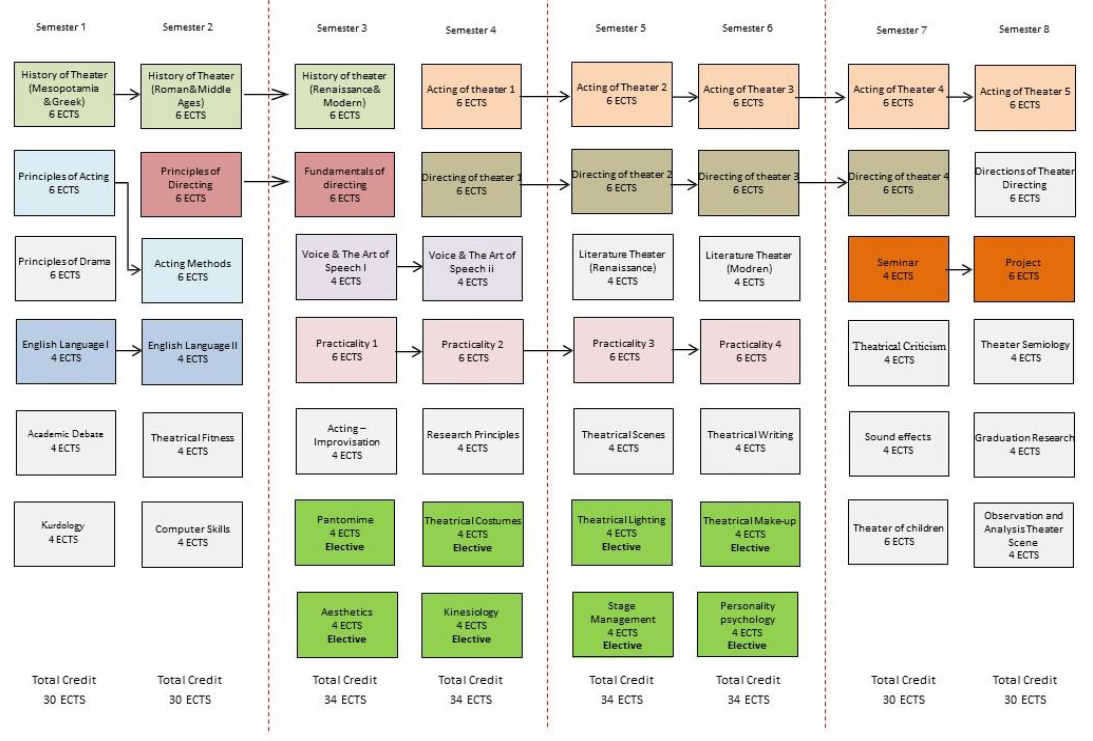
Programme structure diagram with credits
Yearly Timeline
Sept. 1, 2026
⚠️ First year students start around mid-October
⚠️ First year students start exams around 20 of January
July 1, 2027
Check out the full academic calendar on UoD's webstie.
Programme Coordinator

Assistant Lecturer in Theatre Studies - Theatre Directing Branch
Department of Theater
College of Fine Arts
University of Duhok
Apply to the Programme
Public undergraduate admissions in the KRG region are managed centrally by the Ministry of Higher Education through the online ZankoLine portal (regayzanko.com). After Grade 12 Baccalaureate results are released, high schools provide students with unique login credentials to rank their preferred universities and B.Sc. majors during a 10–14 day registration window. Final placement is automatically determined by the student's Grade 12 average, subject choices, and department capacity.